


After much feedback and many requests, I’ve decided to undertake the task of writing another non-fiction book. Although I’m currently at work researching the sequel to World Between Worlds, I also feel it’s time to write a follow-up to Don’t Plant Your Seeds Among Thorns: A Catholic’s Guide to Understanding and Healing From Domestic Abuse.
I want to invite my Substack readers along this writing journey. Below is a draft of the introduction to my next non-fiction book, which focuses on healing from trauma through immersing oneself in what St. Catherine of Siena calls the “house of self-knowledge.” I’m going to dive deep into St. Catherine’s teaching in order to help others find hope, healing and Christ-centered renewal.
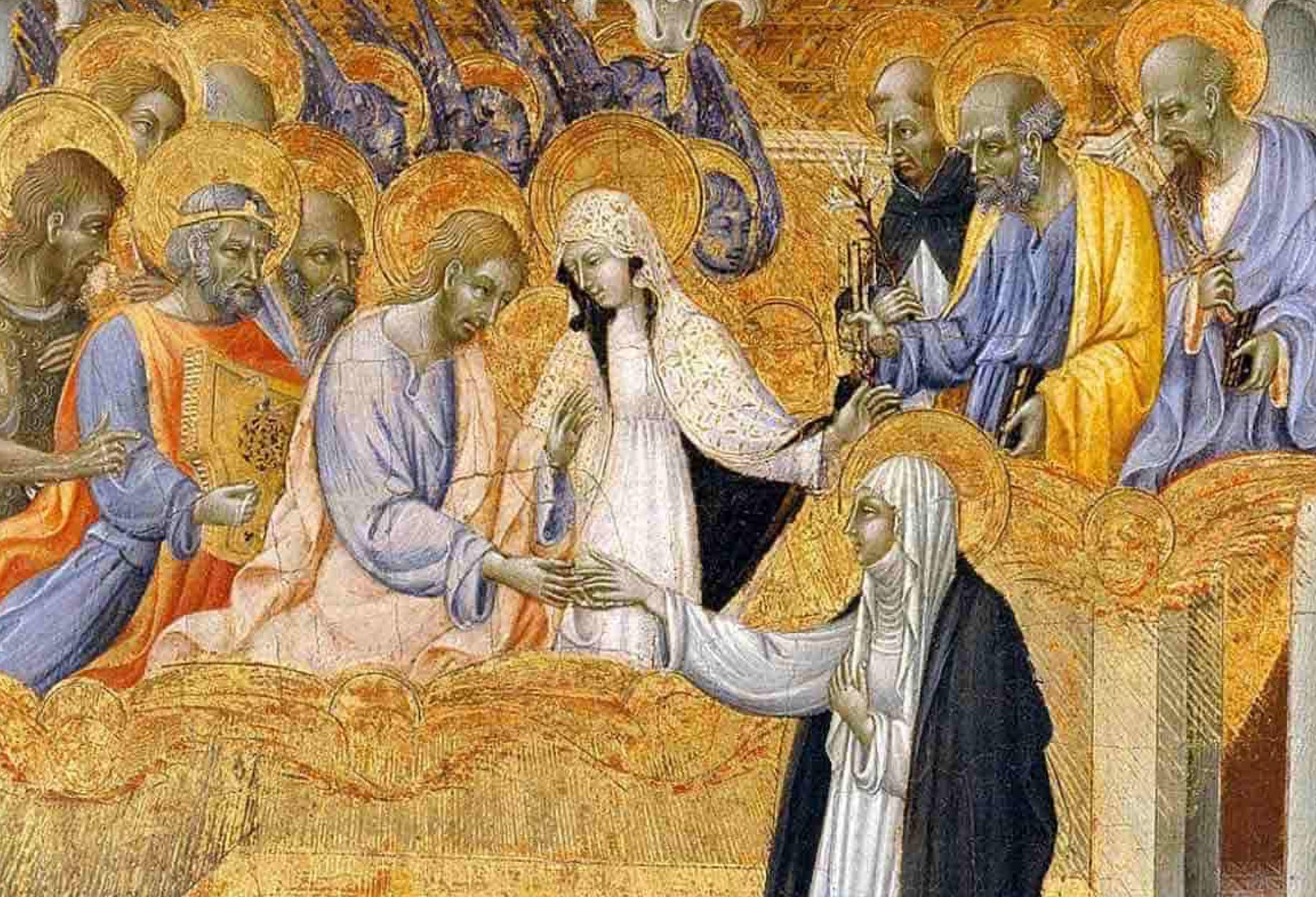
Introduction to … [untitled at the moment, suggestions welcome]
You won’t heal from the effects of marital betrayal by reading a book. You won’t heal by sheer force of will, by joining support groups, or by seeking therapy.
All those things are good and even necessary. I’m certainly not telling you to drop all efforts to heal and simply wait around for something to happen—that won’t work either. What I am saying is that the foundation of healing cannot be those external things—they’re the necessary rooms within the house of healing, but the foundation of the house must be Christ, and Him alone.
Everything is a grace from God. In His Divine Will, as mysterious as that may seem to us mere humans, He permits our traumas to happen. He doesn’t want us to suffer, but He does allow certain sufferings for the sake of our good—and He desires our healing in Him, through Him, and with Him.
God doesn’t want you to survive this life—He longs for you to thrive.
If healing doesn’t come exclusively from a book, why have I bothered to write one? For the simple fact that it will provide help, understanding and tools to guide you as you move forward in a Christ-centered way. It’s not a book, or anything else external, that heals. Jesus alone is the Divine Physician—but He does use various forms of medicine to help you along your journey.
This book is divided into three sections. I don’t go into detail about what abuse is and its effects on the target because I’ve done that already in Don’t Plant Your Seeds Among Thorns: A Catholics Gide to Recognizing and Healing from Domestic Abuse. Instead, I focus on understanding God’s permissive will. Although betrayal is never a part of His ideal divine plan, the free will of other people inevitably infects our lives. As St. Catherine of Siena writes in her Dialogue:
Each of you has your own vineyard, your soul, in which your free will is the appointed worker during this life … But every one is joined to your neighbors’ vineyard without any dividing lines. They are so joined together, in fact, that you cannot do good or evil for yourself without doing the same for your neighbors.
(Dialogue23)
The painful question—one that has been asked since time began—is: Why does God allow tragedy and trauma to fill our lives? We again turn to St. Catherine for our answer. Over and again she wrote about the topic in her letters, and her answer is always the same: Whatever God permits to happen to us He does so to help us grow in holiness, so we can eventually enjoy eternal bliss with Him in heaven. “For this is the will of God, your sanctification” (1 Thess. 4:3).
Although it may be easy to understand this truth with your head, it may not be so easy to believe it with your heart. Using St. Catherine as our guide, I’ll lead you toward a greater heart understanding of our Lord’s immense grace—especially those graces which initially appear bad and cause a great deal of suffering.
The second section of this book deals directly with recovery. How, after such intimate betrayal, can the heart heal? I often think of our Blessed Mother when the topic of healing and forgiveness arises. Everyone who is a parent knows how excruciating it feels to see your child hurt, bullied, or betrayed. How did the Blessed Mother feel toward St. Peter, the dear friend who denied her precious Son not once, but three times? She knew Peter well, embracing him as a very dear son. She worked closely with him after Jesus’s death. How was she able to allow her heart to heal from his betrayal? Again, through the guidance of St. Catherine, we’ll find out.
Finally, we’ll end the book with rays of hope, opening our hearts to Christ’s grace as we move from grief, to acceptance, to thriving. Recognizing that He truly does make all things new (Rev. 21:5) and work all things together for good (Rom. 8:28) sets our hearts on the path of gratitude and peace.
The book will follow this general structure:
I. Introduction
II. Why intimate betrayal hurts so much—and what to do about it (with St. Catherine)
III. Understanding God’s permissive will (again with the help of St. Catherine of Siena)
IV. Mistrust of self—and why it’s such an important piece to healing
V. A new chapter begins—rays of hope and healing, how to move forward in grace and peace
Mistrust of Self
I want to comment a bit on section four, “mistrust of self,” because it seems such a foreign and counter-productive attitude toward healing—yet it’s one of the most important aspects.
The saints often remind us about the necessity of “mistrust of self.” To our easily-offended modern ears often that sounds demeaning and self-defeating. This is particularly true for those who need to heal from the betrayal of a loved one because gaslighting, lies, and other forms of abuse are a part of betrayal. Gaslighting is a technique designed—whether intentionally or not—to erode confidence in one’s own perceptions, beliefs, observations and reality. The target of gaslighting has been trained in the art of self-doubt.
Yet this toxic distortion isn’t a part of the saints’ teaching on mistrust of self; in truth, they teach the opposite. Embracing the spiritual sense of self-doubt helps us counteract the negative shadow of self-doubt caused by gaslighting and betrayal.
I Am She Who is Not
By embracing who we truly are, we become who God designed us to be.
Henry Cardinal Manning, a cardinal under the pontificate of Pope Pius IV in the nineteenth century, reminds us that the supernatural gift of fortitude strengthens the soul “to meet and to bear the fears and the pains” that we’re faced with in life. He continues:
First, it gives a calm courage in times of temptation. St. Paul says, “put you on the armor of God that you may be able to stand against the deceits of the devil” (Eph. 6:11); that is, be armed with fortitude, the signs of which will not be a blind confidence nor an unconsciousness of danger … but at the same time with a great mistrust self, a great confidence in God, a trust that, rather than suffer for us to be tempted beyond what we are able to bear, He will send twelve legions of angels to keep us safe. And this confidence gives power to bear anything …
Mistrust itself without ”a great confidence in God” gets us nowhere. It binds us in self-rejection and disparagement; it keeps us prisoner to our own selves because we’re focusing exclusively on our weaknesses. When we balance mistrust of self—not of our ability to discern or of our worth in Christ, but of our human fragility and propensity to sin—with a deep knowledge of God's mercy and goodness toward us, we come to recognize the truth of who God created us to be.
And then the healing can begin.
One of St. Catherine of Siena’s most famous teachings is that of the house—or cell—of self-knowledge. Steeped in prayer she once heard God the Father say to her :
Do you know, daughter, who you are and who I am? If you know these two things you have beatitude in your grasp. You are she who is not, and I Am He Who Is. Let your soul but become penetrated with this truth, and the Enemy can never lead you astray; you will never be caught in any snare of his, nor ever transgress any commandment of Mine; you will have set your feet on the royal road which leads to the fulness of grace, and truth, and light.
This incident was recounted by her spiritual director, Raimondo of Capua. He goes on to comment:
What a word this is! A short word, and a meaning without limit; a terse teaching, and a depth unfathomable; a measured maxim, and a wisdom without measure …Pause awhile, Reader. Linger here with me by this peerless treasure which we have found in Catherine’s field. Let us take the trouble to unearth it, for even what we see on the surface shows that a rich hoard lies hidden here. The words of Infallible Truth to her were these: “If you know these two things, you will be saved.” And He added: “Once your soul becomes penetrated with this truth, the Enemy can never lead you astray …” As I see it, it is good for us to be here.
There is much to be unpacked in St. Catherine’s teaching of the house of self-knowledge. The following chapters will explore the theological meaning and spiritual depth behind distrust of self, enabling us to draw closer to Christ and His Sacred Heart. This is the only true way to heal.
Dwelling in the house of self-knowledge helps us heal from the trauma of this world by renewing us with the heart knowledge that we truly can do all things through Christ who strengthens us. I’ll unpack how this happens in the coming chapters.
Of ourselves we are all so weak and frail that we fall at the slightest obstacle. But Divine Providence is at work within our soul, strengthening us and relieving us of all weakness. So be trustful, firmly believing that God always provides for souls who trust in Him.
(Letter T142 to Sano di Maco di Mazzacorno, Vol. I, 76)

Discover my books!
